
If you are a property manager in Vancouver or a member of a strata council in Burnaby, you already know the "Premium Shock" of the early 2020s has shifted. We aren't just worried about the cost of the policy anymore; we’re worried about the cost of using it.
As we move through 2026, the Vancouver strata landscape is facing a massive "Deductible Shock." While insurance premiums have stabilized somewhat, water-damage deductibles remain at astronomical levels. It’s now routine to see $100,000 to $250,000 deductibles for water claims in high-rise towers across the Lower Mainland. In some extreme cases, buildings are carrying half-million-dollar deductibles just to stay insurable.
For a property manager or asset manager, one failed washing machine hose in a 30th-floor unit isn't just a maintenance headache: it’s a $250,000 liability that can trigger special levies, drain contingency reserve funds, and spark legal battles over chargebacks.
At Leak Logic Canada, we’ve seen how these numbers can paralyze a building’s operations. But there is a way out. Here is your 2026 action plan to protect your building assets, reduce insurance claims, and keep your residents from facing six-figure surprises.
The State of the Crisis in 2026
Since 2017, water damage has accounted for approximately 46% of total strata claim costs in British Columbia. Because of this, insurers have changed their strategy. Instead of just raising premiums, they’ve pushed deductibles higher to force buildings to take risk management seriously.
In 2026, a "healthy" building in Richmond or Coquitlam might still have a $100k deductible. Older buildings or those with a history of claims are often pushed into the $250k+ bracket. When a claim happens, the strata corporation is on the hook for that amount. If the leak is traced back to a specific unit, the strata can charge that deductible back to the owner: assuming they can prove responsibility under the amended Strata Property Act.
This creates a high-stakes environment where everyone is one drip away from financial disaster.
Phase 1: Deploy a Smart Water Leak Detection System
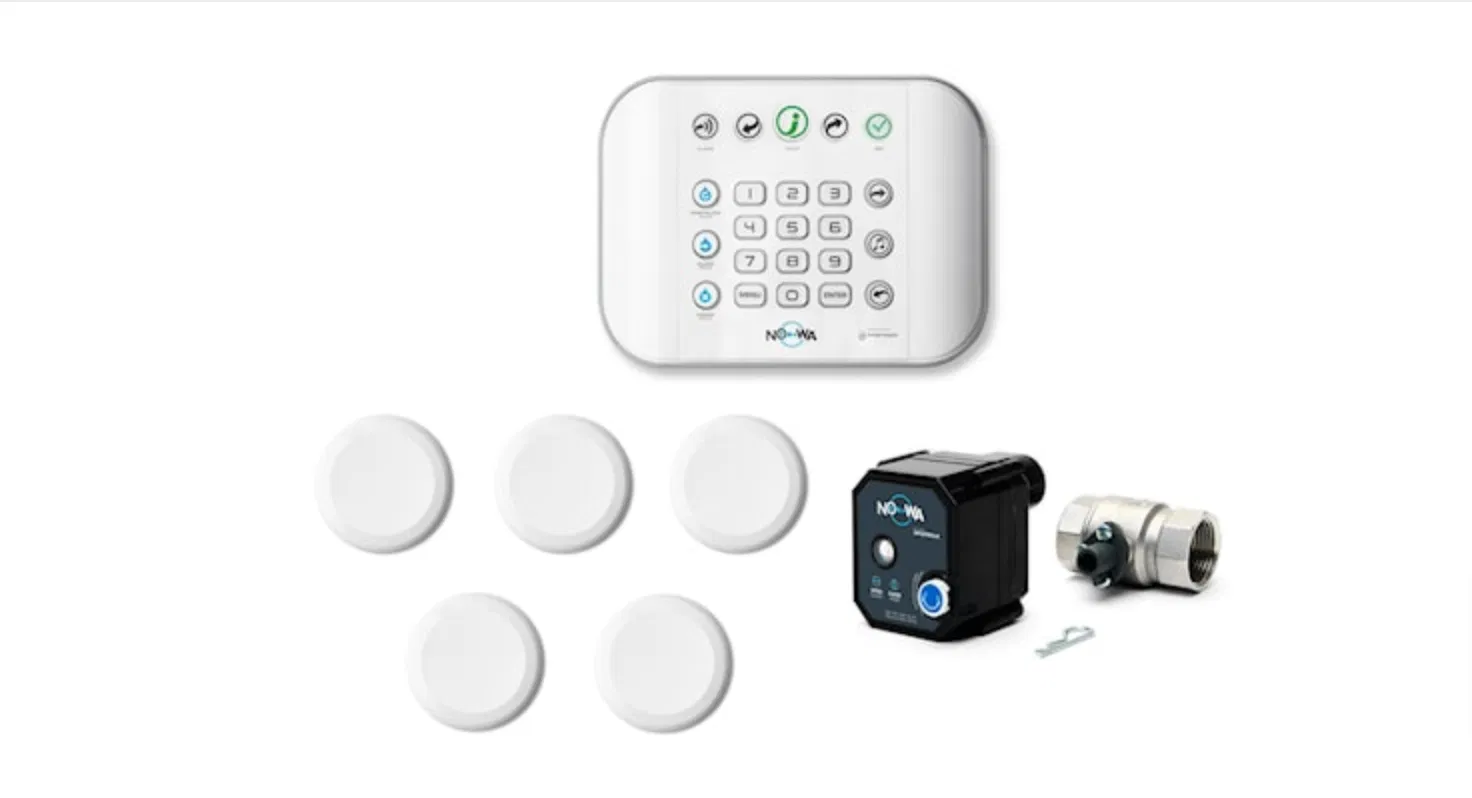
The first line of defense is no longer a human eye; it’s IoT technology. Modern high-rise water leak detection has evolved. We aren't talking about the cheap plastic pucks you find at a big-box store. Those are for homeowners; you need a commercial-grade solution.
The Power of 0.015-Inch Sensitivity
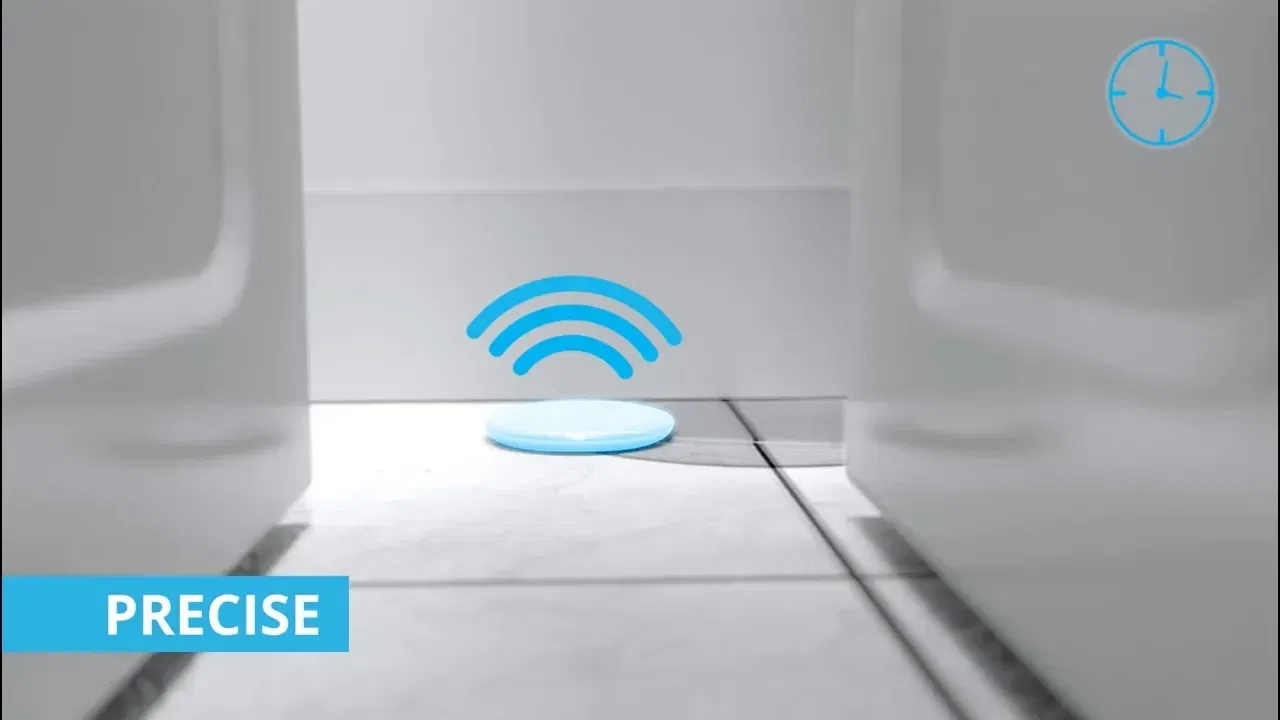
When it comes to protecting a multi-million dollar asset, precision matters. Our Nowa systems feature sensors with 0.015-inch leak sensitivity. Why does this matter? Because by the time a traditional sensor "floats" in a pool of water, the damage has already seeped through the floor and into the three units below.
Detecting water at the 0.015-inch level means catching the leak when it’s a puddle, not a flood. This allows for an immediate response that stops damage before it triggers an insurance claim.
Phase 2: Stop the Flow with an Automatic Water Shut Off Valve
Detecting a leak is only half the battle. If a pipe bursts at 2:00 AM on a Sunday in a downtown Vancouver tower, it might take 20 minutes for a resident to notice and another 30 minutes for a plumber or building manager to arrive and find the manual shutoff. In that hour, thousands of gallons of water can travel down 10 floors.
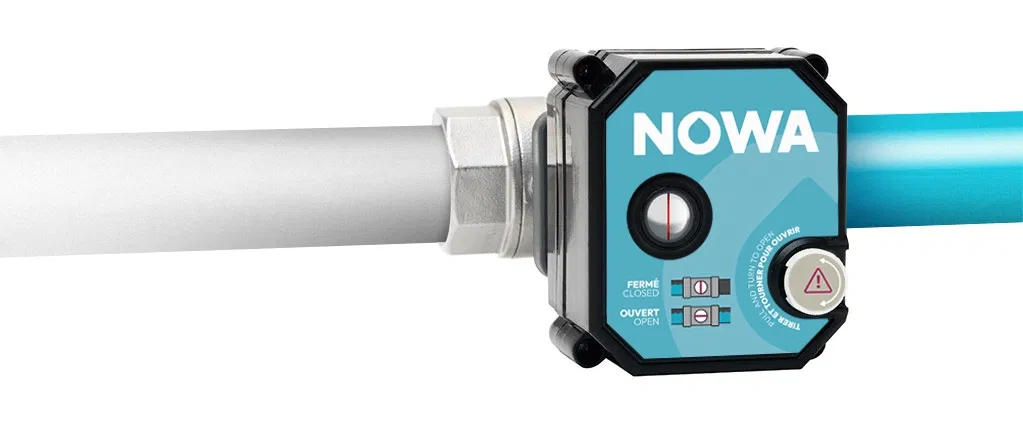
A smart water leak detector must be paired with an automatic water shut off valve.
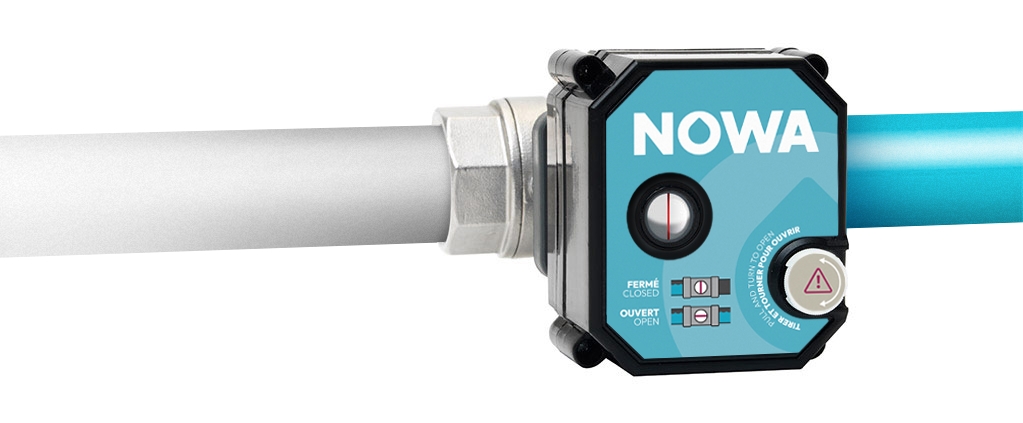
Our Nowa valves are integrated directly into the building's plumbing. The moment a sensor detects moisture, it sends a signal to the valve, which closes in seconds. This happens automatically, without the need for human intervention. It’s the difference between a minor clean-up and a building-wide catastrophe.
Phase 3: Tackle the Hidden Threat of Freeze Alerts
Vancouver winters are unpredictable. We’ve all seen what happens when a sudden cold snap hits and a pipe in a parkade or a mechanical room freezes and bursts.
Our sensors include pinpoint 5°C freeze detection. They warn you before the water actually freezes. This gives property managers a critical head start to check the heating systems or insulate exposed pipes before the pressure builds and the pipe fails. This proactive alerting is a cornerstone of water leak insurance savings.
Phase 4: Long-Term Reliability with Gold-Plated Probes
In the humid or coastal environment of the Lower Mainland, oxidation is the enemy of electronics. Many standard sensors fail because their probes oxidize over time, losing their ability to conduct electricity and detect water.
To ensure your investment lasts, Leak Logic Canada uses gold-plated sensor probes. Gold does not oxidize. This ensures that a sensor installed today will be just as responsive ten years from now. When you’re dealing with a potential $250,000 deductible, "reliable enough" isn't good enough. You need guaranteed performance.
Phased Retrofits: An Action Plan for Strata Councils
We understand that strata budgets are tight. You don't have to do the entire building at once. Many of our clients in the Vancouver area take a phased approach:
- High-Risk Areas First: Start by installing sensors and shutoff valves in mechanical rooms, laundry rooms, and units above critical infrastructure like the lobby or electrical vaults.
- Phased Unit Rollouts: Work through the building floor by floor. This spreads the cost over several budget cycles while steadily lowering the building’s overall risk profile.
- Insurance Negotiation: Use the installation as leverage. Many insurers will offer better coverage or lower deductibles if you can prove the building is protected by 24/7 IoT monitoring.
Local Focus: Why Vancouver Buildings Need This Now
From the West End’s aging high-rises to the new luxury towers in Coal Harbour, every building is at risk. Vancouver’s high density means a single leak has a massive "multiplier effect." Because of how these buildings are constructed, water travels horizontally and vertically with ease.
Moreover, as replacement costs for high-rise condos in Vancouver have climbed to $500+ per square foot, the cost of repairs is higher than ever. Stopping a leak at the source isn't just about insurance; it’s about protecting the building’s very foundation and the peace of mind of its residents.
Key Takeaways for Property Managers
- The Goal: Prevent the claim, don't just manage the damage.
- The Tech: Look for 0.015-inch sensitivity and gold-plated probes to ensure reliability.
- The Outcome: Lower liability, fewer after-hours emergency calls, and better standing with insurers.
- The Plan: Start with high-risk areas and move toward building-wide protection.
FAQ: Protecting Your Building from Water Damage
Q: Can these systems be installed in older buildings?
A: Absolutely. Our systems are designed for both new construction and retrofits. Because our sensors are wireless and use LTE or encrypted signals, we don't need to tear open walls or run miles of cabling.
Q: How do I know the sensors are still working?
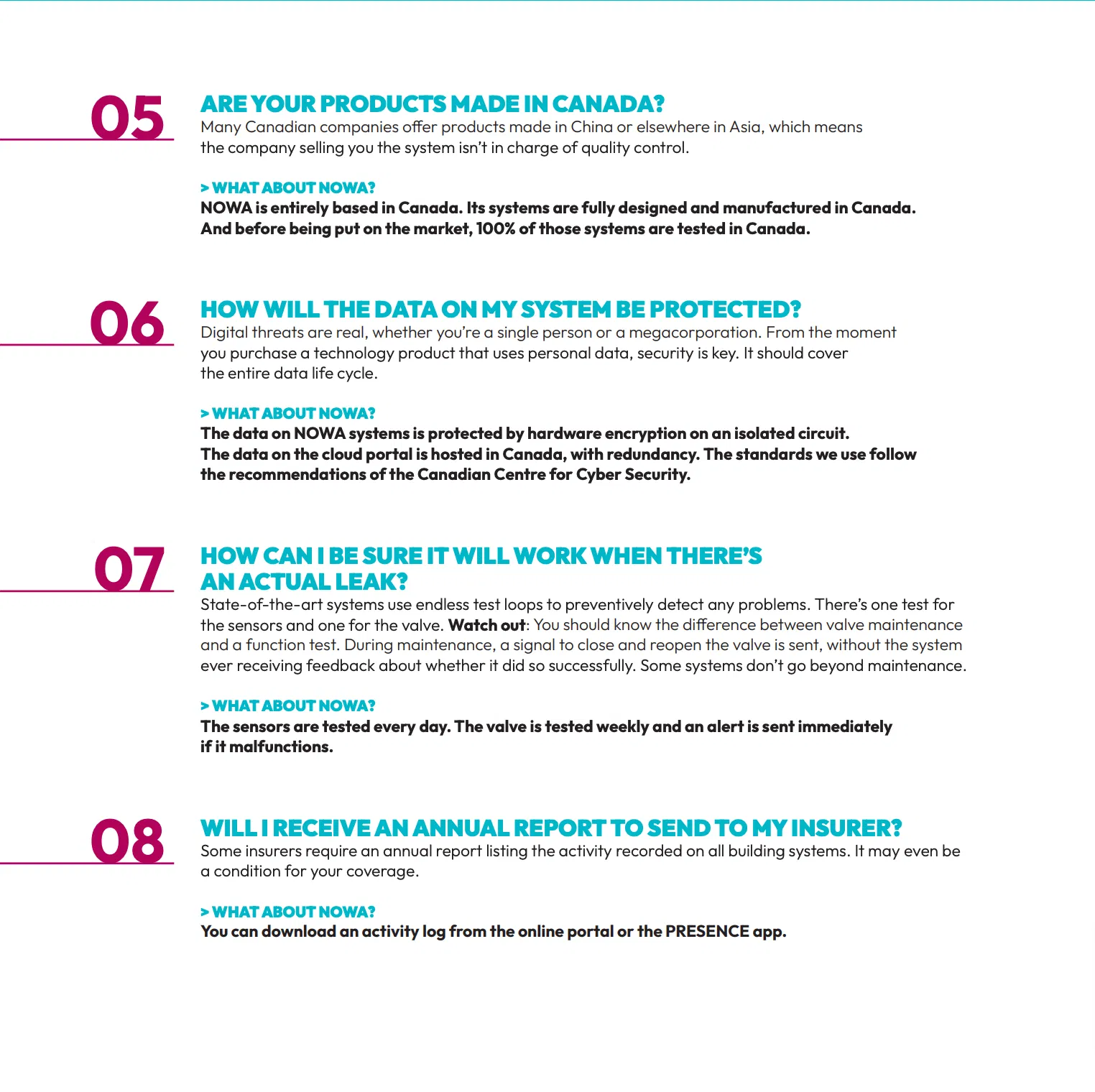
A: The Nowa system performs daily self-tests. If a sensor goes offline or the battery runs low (though they have a 10-year battery life), the management portal sends an instant alert to the property manager or maintenance team.
Q: Will this lower my building's insurance deductible?
A: While every insurer is different, many major providers in BC now recognize "Certified" installations of leak detection systems. Providing proof of 24/7 monitoring and automatic shutoff is often the key to negotiating a lower deductible or avoiding a "non-renewal" notice.
Stop Being a Target for High Deductibles
The era of "hoping for the best" with plumbing is over. In 2026, managing a building in Vancouver requires a proactive, tech-driven approach to risk. By installing a high-rise water leak detection system, you aren't just buying hardware: you’re buying an insurance policy against the deductible crisis.
Don't wait for the next $250,000 emergency call to take action. Protect your assets, empower your council, and safeguard your residents today.
Contact Leak Logic Canada for a professional assessment of your building's water safety needs. We specialize in the sales, installation, and 24/7 monitoring of advanced IoT systems tailored for the unique challenges of the Vancouver and Lower Mainland market.
Call us today at [Insert Phone Number/Contact Link] to start your building’s protection plan. What's the biggest water safety concern in your building right now? Let’s solve it together.