
If you are a property manager in Vancouver or a member of a strata council in the Lower Mainland, you already know the sound of a nightmare. It’s not a ghost; it’s the sound of water rushing through a ceiling at 2:00 AM on a Sunday. By the time the restoration crew arrives, the damage is done: not just to the units, but to your building’s insurance standing and your long-term maintenance budget.
Managing water risk in a multi-unit residential building is a high-stakes game. In a city like Vancouver, where real estate values are through the roof and insurance deductibles for water damage have skyrocketed to $50,000, $100,000, or even $250,000, "good enough" isn't good enough anymore.
Many strata councils and asset managers think they have a handle on leak prevention, but we often see the same tactical errors being made over and over. These mistakes don’t just lead to wet carpets; they lead to massive financial liability and operational chaos.
Here are the seven most common mistakes we see in condo water leak prevention and, more importantly, how to fix them before the next pipe bursts.
1. Relying on Manual "Visual" Inspections
The most common mistake is believing that a weekly or monthly walk-through by a building manager is a sufficient prevention strategy. While visual checks are great for catching a dripping faucet in a common area bathroom, they do nothing for the slow leak behind a dishwasher or a pinhole leak in a vertical riser.
Imagine a slow leak in a 15th-floor unit that goes unnoticed for three days. By the time moisture is visible on the drywall, it has likely already migrated through four floors of flooring and insulation. Relying on human eyes for 24/7 protection is a gamble that rarely pays off.
The Fix: Transition from manual checks to 24/7 wireless monitoring. You need a system that never sleeps. Professional IoT sensors can detect moisture at a 0.015-inch sensitivity level: long before a human eye would ever spot a damp patch.
2. Opting for "Big Box" Consumer-Grade Sensors
When strata councils look to save money, they often turn to cheap, battery-operated sensors found at local hardware stores. While these might be fine for a single-family home’s basement, they are a liability in a high-rise environment. Consumer sensors often rely on basic Wi-Fi (which can be unreliable in concrete buildings) and use low-quality probes that corrode over time.
Moreover, these cheap units often lack the range needed to communicate through multiple floors of a Vancouver concrete tower. If the sensor can’t reach the gateway, it’s just a plastic paperweight.
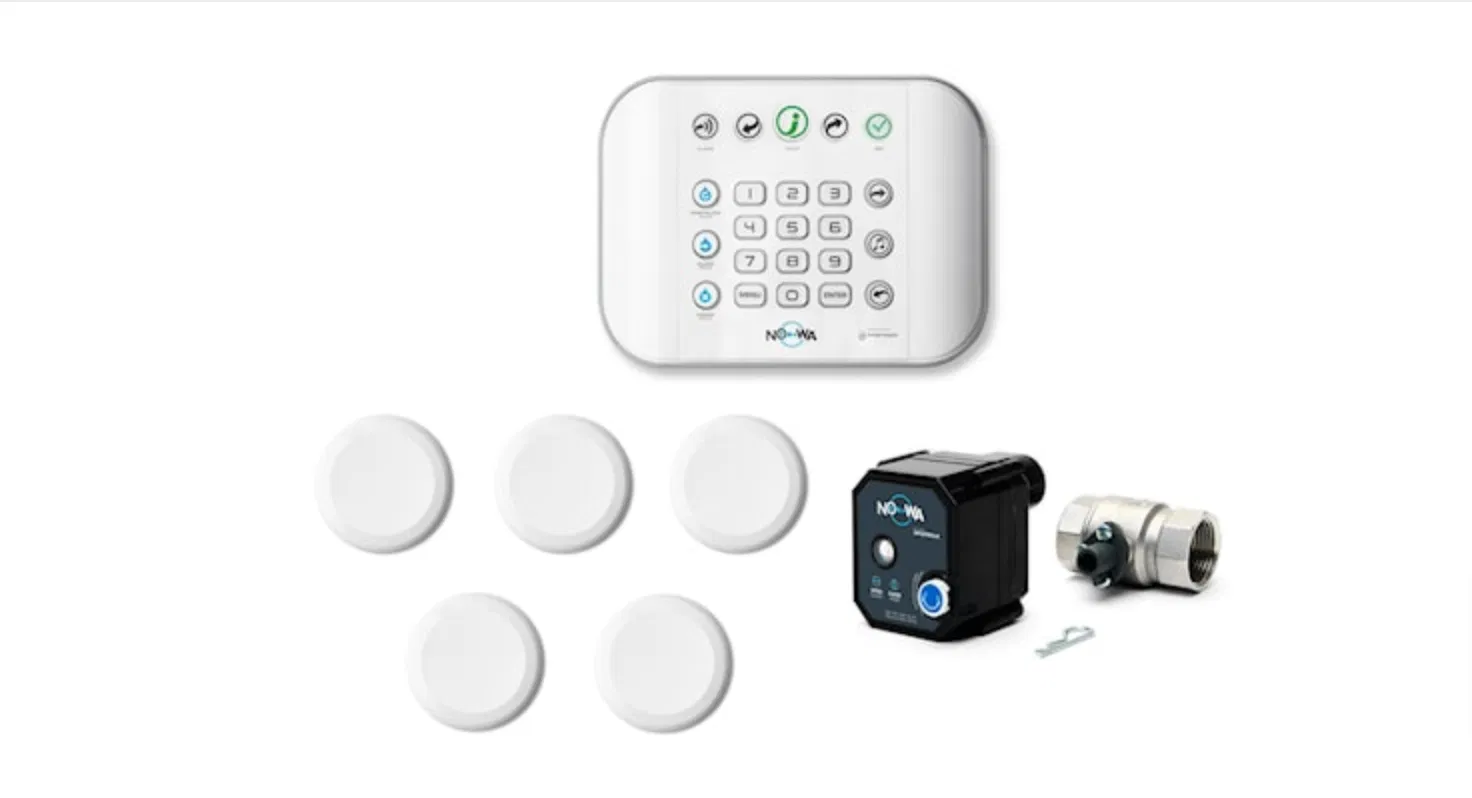
The Fix: Invest in professional-grade hardware like the Nowa 4S system. These systems use gold-plated probes to prevent corrosion and ensure 100% conductivity when moisture is detected. They are designed specifically for the rigors of multi-unit buildings, ensuring that the signal gets out regardless of building density.
3. Ignoring the "Insurance Gap"
Many property managers treat water damage as an inevitable cost of doing business, assuming insurance will cover the "big ones." However, the reality in BC is changing. Insurance companies are now penalizing buildings with frequent claims by drastically raising deductibles or, in some cases, refusing to renew policies altogether.
If your building has a $100,000 water damage deductible, a $40,000 leak is an out-of-pocket expense for the strata. That’s a massive hit to the reserve fund or a sudden special levy for owners.
The Fix: Align your prevention strategy with insurance incentives. Many major Canadian insurers, such as Northbridge, Aviva, and Intact, offer significant premium reductions or deductible "buy-downs" for buildings equipped with advanced leak detection. In fact, some policies, like the Northbridge Onyx policy, even cover the cost of the hardware itself.

4. Alerting Without Action: The Notification Trap
A sensor that sends a text message to a property manager at 3:00 AM is helpful, but it doesn't stop the water. If the manager is asleep or the resident is on vacation, that "help" is coming several hours too late. In a high-rise, a burst washing machine hose can release hundreds of gallons of water in minutes.
The gap between "detection" and "shut-off" is where the most expensive damage occurs.
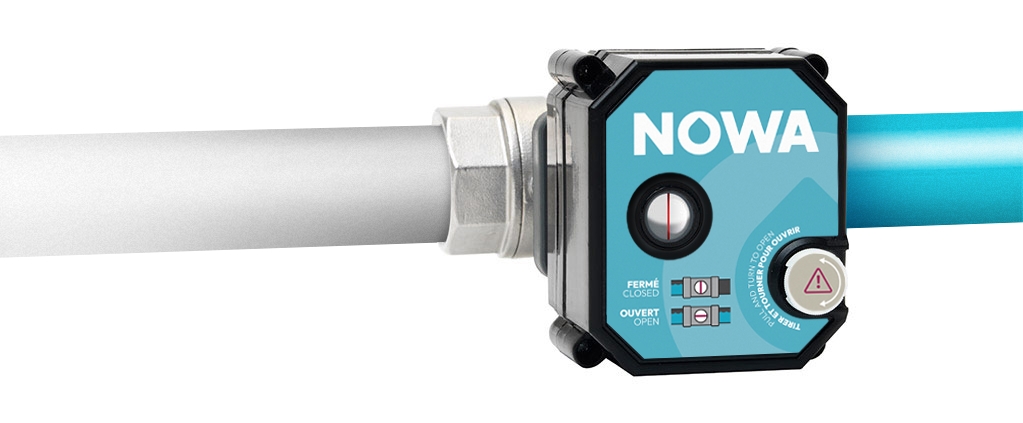
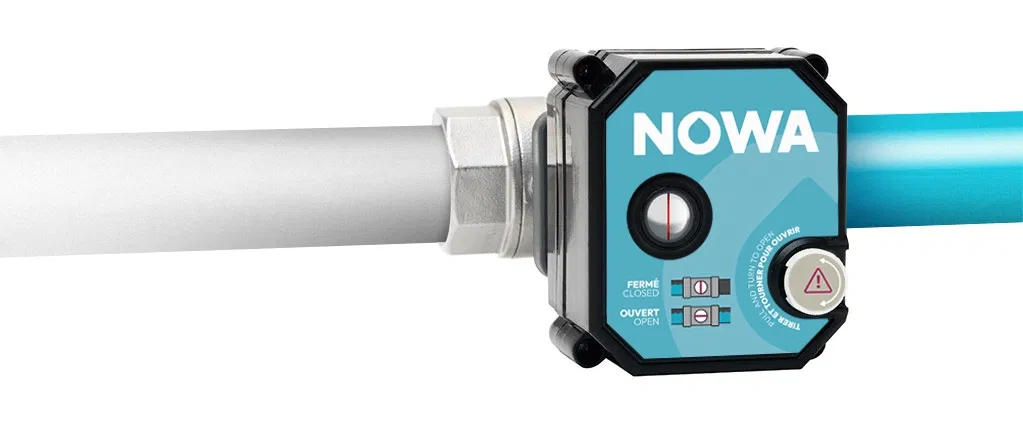
The Fix: You need automated water shut-off valves. When a sensor detects moisture, the system should automatically signal the master valve to close instantly: without requiring human intervention. This stops the leak at the source in seconds, turning a potential six-figure disaster into a minor plumbing repair.
5. Neglecting Temperature and Freeze Risks
In the Lower Mainland, we often think our winters are mild, but "Arctic Outflows" are a real threat to building infrastructure. Pipes located near exterior walls or in parkade ceilings are highly susceptible to freezing. When these pipes thaw, they don't just leak: they burst.
Many strata councils fail to monitor the ambient temperature in critical mechanical spaces or near vulnerable plumbing runs.
The Fix: Use sensors equipped with 5°C freeze alerts. Leak Logic’s Nowa technology doesn't just look for water; it monitors the environment. If a mechanical room’s temperature drops to a dangerous level, the system sends a proactive alert so the heat can be adjusted before the pipes freeze. Prevention is always cheaper than restoration.
6. Overlooking Aging Infrastructure and Mixed Materials
Many older Vancouver condos are undergoing piping retrofits. A common mistake during these transitions is mixing incompatible materials or failing to account for the stresses that new PEX or copper connections put on old valves. As highlighted in our research, galvanic corrosion can occur when different metals are joined improperly, leading to pinhole leaks hidden behind walls.
Additionally, property managers often forget that modern appliances (dishwashers, high-efficiency washers) operate at higher pressures, which can strain aging plumbing joints in older buildings.
The Fix: Implement a phased retrofit strategy that includes leak detection at all major junctions. Don't just replace the pipes; protect the investment by ensuring that if a new connection fails, the system catches it immediately.
7. Fragmented Management of Leak Data
For an asset manager overseeing a portfolio of five or ten buildings, managing individual leak alarms is a logistical nightmare. If each building has a different "solution" or, worse, no centralized reporting, it is impossible to identify trends (like a specific floor or unit type having recurring issues).
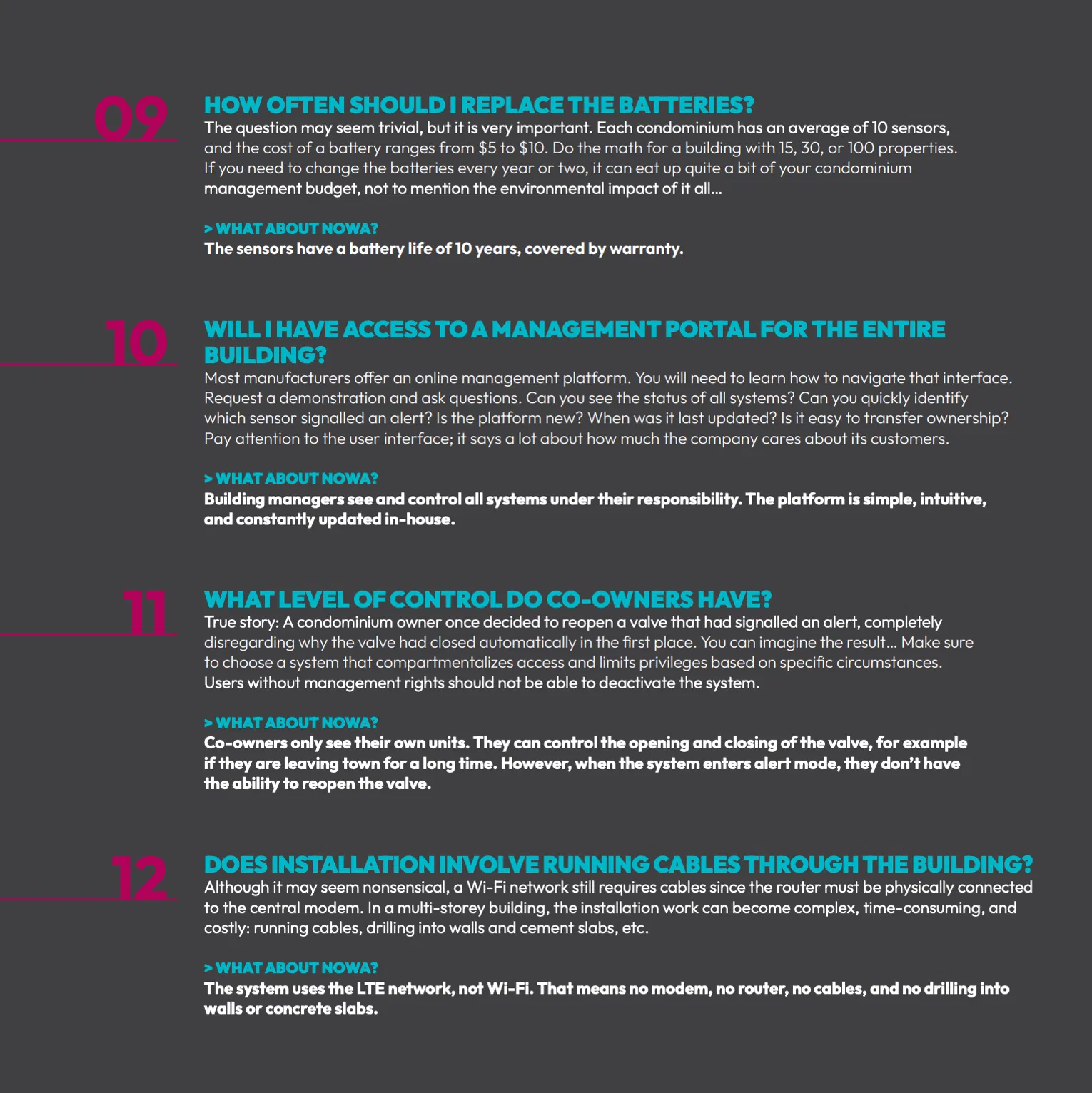
The Fix: Demand a centralized management portal. Professional systems like Nowa provide a dashboard where building managers can see the status of every sensor across an entire portfolio. This allows for predictive maintenance: if Unit 402 has had three minor moisture alerts in a month, it’s time to send a plumber to check the hot water tank before it fails completely.
Protecting Your Vancouver Assets with Leak Logic Canada
The goal of every strata council and property manager in the Lower Mainland should be "Zero Claims." It sounds ambitious, but with the right technology, it is entirely achievable.
At Leak Logic Canada, we don't just sell sensors; we provide peace of mind. Our systems are specifically designed for the unique challenges of Vancouver’s multi-unit residential market. We understand the pressure you are under to keep insurance costs low and building operations smooth.
By moving away from manual checks and cheap hardware, and embracing professional IoT solutions with 0.015-inch leak sensitivity, gold-plated probes, and instant automatic shut-off, you are doing more than just preventing leaks: you are protecting your building's future.
Ready to secure your building?
If you are looking for professional water leak detection "near me" in the Vancouver area, don't wait for the next emergency. Contact Leak Logic Canada today for a comprehensive risk assessment of your property. We serve clients across Vancouver, Burnaby, Richmond, and the entire Lower Mainland, helping strata councils reduce deductibles and safeguard their assets.
Protect your building. Prevent the flood. Partner with Leak Logic Canada.
Visit our website to learn more about our solutions or browse our latest posts for more risk management tips.