If you’re a property manager or a strata council member in Vancouver, you’ve likely had "The Nightmare." You know the one: it’s 3:15 AM on a rainy Tuesday, your phone is buzzing across the nightstand, and the caller ID shows a tenant from the 14th floor. There isn’t just a leak; there’s a localized indoor waterfall cascading through three units, a mechanical room, and the lobby’s custom millwork.
Water damage is the leading cause of insurance claims in commercial and multi-unit residential buildings across the Lower Mainland. It’s expensive, it’s disruptive, and quite frankly, it’s a massive headache for asset managers trying to maintain a bottom line. But here’s the kicker: most of this damage is entirely preventable.
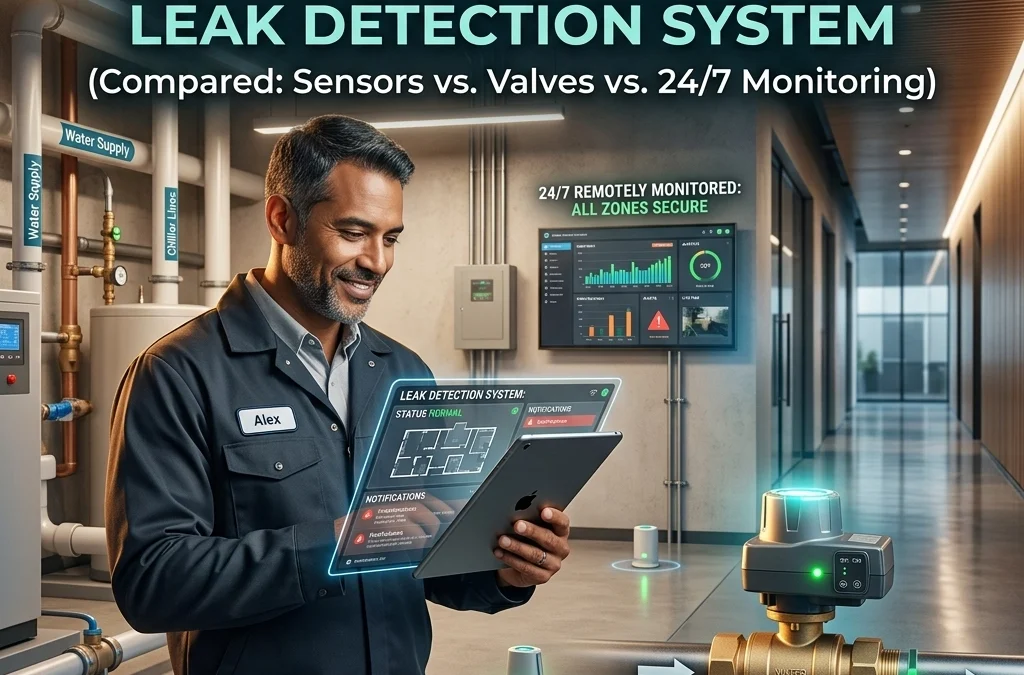
Choosing a commercial leak detection system isn't just about buying some gadgets at a big-box store. It’s about building a defensive perimeter around your investment. To do that, you need to understand the three pillars of protection: the sensors (the ears), the valves (the hands), and the monitoring (the brain).
The Sensors: Your First Line of Defense (The "Ears")
In the world of commercial leak detection, not all sensors are created equal. If you’re looking at cheap, plastic sensors that look like they came out of a cereal box, you’re asking for trouble. In a commercial environment: think mechanical rooms, parkades, and hundreds of condo units: reliability is everything.
At Leak Logic Canada, we prioritize gold-plated sensor reliability. Why gold? Because unlike other metals, gold doesn't corrode. In the damp, humid environments where leaks usually start, a standard copper or steel probe will eventually oxidize, potentially failing right when you need it most. Our sensors feature gold-plated probes that can detect a water film as thin as 0.015 inches. That is roughly the thickness of a few sheets of paper. If a pipe so much as "sweats" too hard, you’ll know about it.
Point Sensors vs. Rope Sensors
When designing a system for a Vancouver high-rise, we typically use two types of sensors:
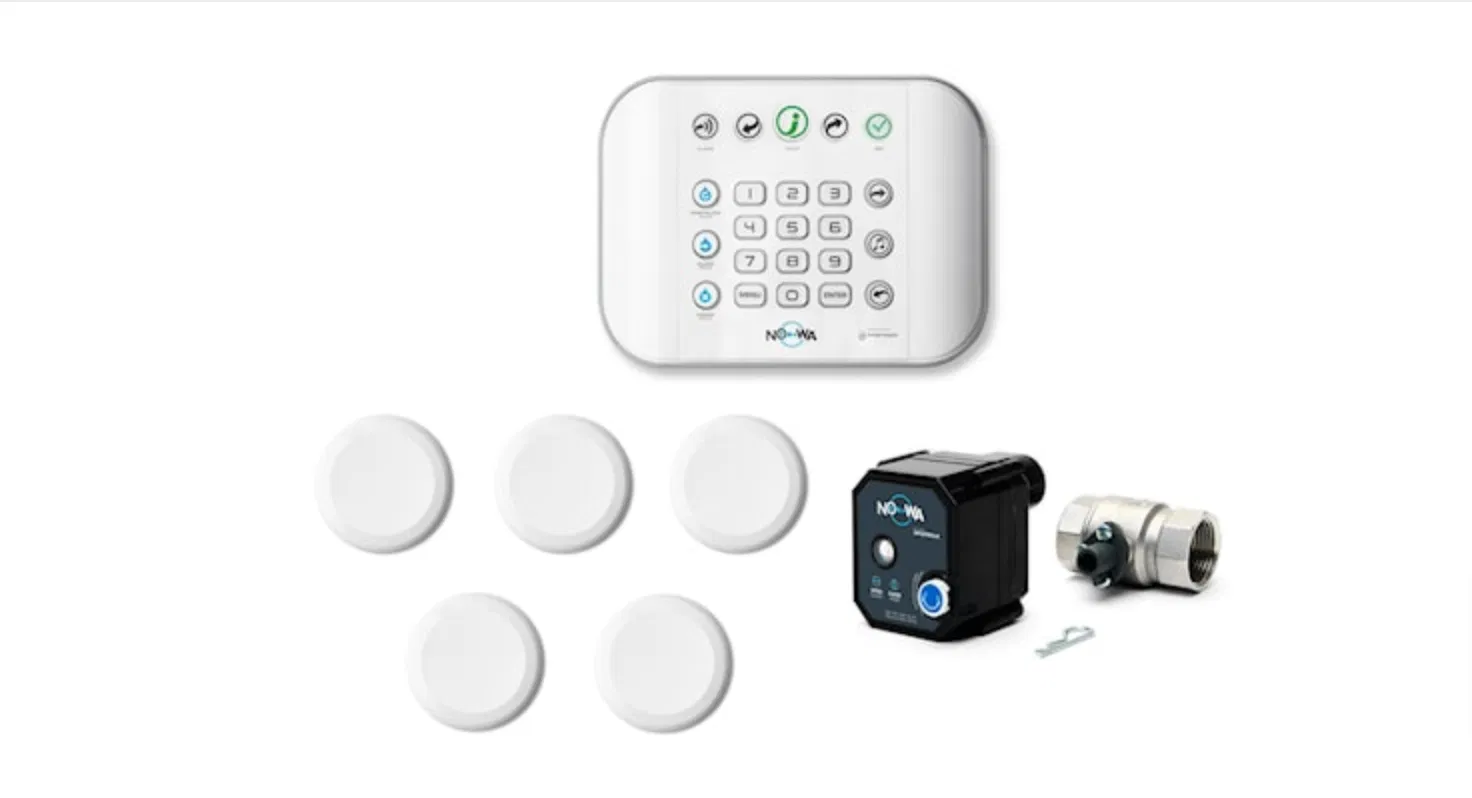
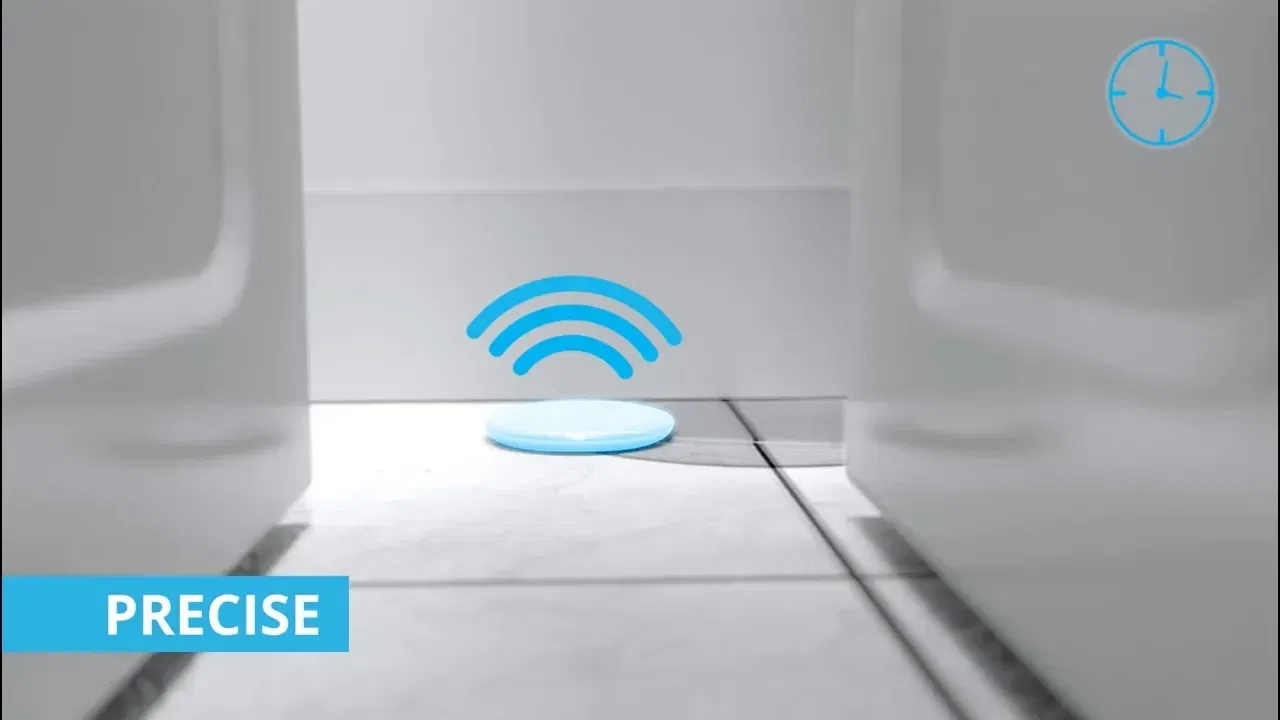
- Point Sensors: These are "PRECISE" units placed under sinks, toilets, or near hot water tanks. They are the snipers of the leak world: placed exactly where the risk is highest.
- Rope Sensors: These are long, flexible cables that detect water anywhere along their length. These are perfect for mechanical rooms or perimeters of large server rooms.
For more on how these work in a multi-unit setting, check out our guide on water sensors for leaks and humidity.
The Freeze Alert: Because BC Winters Aren't Always Mild
We love our Vancouver winters: mostly because they aren't -40°C. However, the Lower Mainland is notorious for "Cold Snaps" that catch buildings off guard. When a pipe freezes in a commercial building, it doesn’t just stop the water; it expands until the copper or PEX splits. When it finally thaws, you have a catastrophe on your hands.
A professional freeze alert sensor is a mandatory requirement for any serious commercial setup. Our Nowa systems include a 5°C freeze alert. If the temperature in a mechanical room or an empty unit drops to 5°C, the system triggers an alert long before the water reaches the 0°C freezing point. This gives property managers time to get a technician on-site or turn up the heat before the pipes burst. It’s the difference between a quick service call and a $200,000 restoration bill. You can read more about these freeze sensor innovations to see how they save assets.
The Shut-Off Valve: The "Stop Button" (The "Hands")
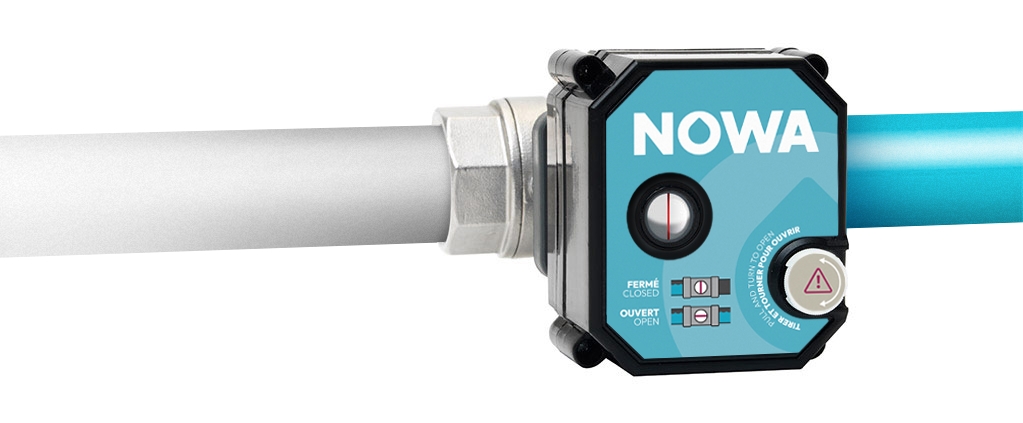
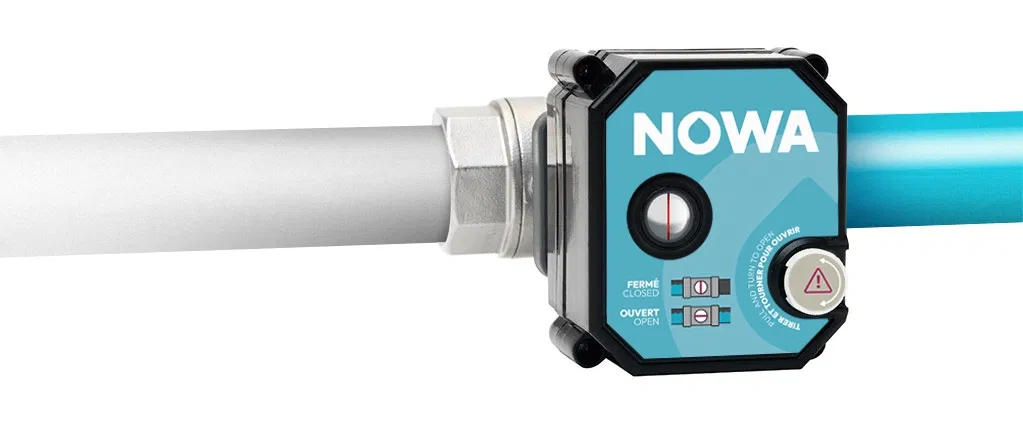
A sensor that just beeps is a glorified smoke alarm. If a leak happens on a Sunday evening and no one is around to hear the beep, the water keeps flowing. A true commercial leak detection system must include an automatic water shut off valve with leak detection.
When our sensors detect water (at that 0.015-inch sensitivity level), they send a signal to the master control panel, which then commands the smart water shutoff valve to close instantly. We’re talking seconds. By the time the property manager gets the notification on their phone, the water is already off.
In a commercial setting, these valves need to be robust. While residential systems might handle a 3/4" pipe, commercial buildings require valves that can scale up to 6 inches for main lines. This level of automation is why so many Strata Councils are moving toward preventing condo water damage through integrated technology rather than just relying on human intervention.
24/7 Monitoring: The Brain of the Operation
Imagine managing a portfolio of ten buildings across Burnaby, Richmond, and Vancouver. You can’t be everywhere at once. This is where 24/7 remote monitoring becomes your best friend.
Modern IoT (Internet of Things) systems, like the ones we install, don't just sit there waiting for a leak. They "heartbeat" every day. They check their own battery levels, their signal strength, and their valve connectivity. If a sensor goes offline, you get an alert.
Our PRESENCE service provides dedicated monitoring that ensures your building is always protected. Whether it's via Wi-Fi or an LTE-enabled 4S system (which works even if the building’s internet goes down), you have total visibility. This is crucial for building sensors and real-estate safety, as it transforms a reactive maintenance model into a proactive risk-management strategy.
The Financials: Insurance, Construction, and Peace of Mind
Let’s talk money. Insurance premiums in British Columbia have skyrocketed over the last few years, specifically for high-rise condos and commercial properties. Why? Because water damage claims are too frequent and too expensive.
Many major Canadian insurers: like Northbridge, Aviva, and Intact: now offer significant incentives or even mandatory requirements for commercial leak detection systems. In fact, some policies, like the Northbridge Onyx policy, may even cover the cost of the system because they know it reduces their risk so dramatically.

By installing a system with PREVCAN certification, you aren't just protecting the floors; you're protecting the building's insurability. High deductibles (some as high as $100k or $250k for water damage) can be devastating for a Strata’s contingency reserve fund. A proactive system is an investment that pays for itself the very first time it stops a major leak. For a deeper dive into the numbers, check out water leak insurance savings.
Why Choose Leak Logic Canada for Your Vancouver Property?
When searching for "commercial leak detection near me" in the Lower Mainland, you'll find plenty of options, but few offer the specialized B2B focus that Leak Logic Canada provides. We understand the pressure Property Managers and Strata Councils are under.
Our systems are:
- Canadian-made: Built for our climate and our building codes.
- Ultra-Sensitive: 0.015-inch detection means we catch the "hidden" leaks before they become floods.
- Freeze-Ready: 5°C alerts keep your pipes safe during Vancouver's winter snaps.
- Professionally Monitored: We don't just sell hardware; we provide ongoing protection.

Whether you are overseeing a new construction project in Surrey or retrofitting an aging high-rise in the West End, we have the expertise to scale a solution to your specific needs. Don't wait for the 3 AM phone call to realize your building is vulnerable.
Protect Your Assets Today
Protecting your commercial property or condo building shouldn't be a guessing game. From gold-plated sensors to automated shut-off valves and 24/7 monitoring, Leak Logic Canada provides the "gold standard" in water damage prevention. We serve the entire Lower Mainland, providing local expertise and rapid response to keep your building dry and your insurance premiums down.
Ready to safeguard your property? Stop leaks instantly and automatically with the experts. Call Leak Logic Canada today at [Insert Phone Number] or contact us online to schedule a consultation for your building in Vancouver, Burnaby, Richmond, or anywhere in the BC Lower Mainland. Let’s protect what matters most.