
Imagine it’s 3:00 AM on a rainy Tuesday in Vancouver. While most of the city is asleep, a small pipe coupling on the 12th floor of your commercial high-rise decides to give up. By the time the custodial staff arrives at 7:00 AM, water has migrated through three floors of premium office space, soaked the server room, and ruined a custom hardwood floor in the lobby.
As a property manager or strata council member in the Lower Mainland, this isn't just a "what-if" scenario: it’s a multi-million dollar nightmare. At Leak Logic Canada, we’ve seen how these disasters unfold, and more importantly, we know how to stop them.
Choosing a water leak detection system for a commercial building isn't like buying a smart plug for your lamp. It requires a strategic approach that balances technology, coverage, and reliability. Today, I’m going to walk you through how to compare the best systems on the market so you can protect your investment and your peace of mind.
Why Commercial Buildings Need a Different Approach
In a residential home, a few battery-operated pucks under the sink might suffice. But for a high rise water leak detection strategy, you need enterprise-level muscle. Commercial buildings have complex HVAC systems, miles of internal plumbing, and high-pressure lines that can dump hundreds of gallons of water in minutes.
Moreover, insurance providers in BC are becoming increasingly strict. Many now require proof of a professional smart water leak detector installation with an automatic water shut off valve just to maintain coverage or keep premiums manageable.

1. Comparing the Core Technologies
When you start shopping around, you’ll notice three main types of detection. Each has its place, but they aren't created equal.
Sensor-Based Detectors (Point and Rope)
These are the most common. They use physical sensors placed on the floor or around equipment. When water touches the sensor, it completes a circuit and triggers an alert.
- Best for: Mechanical rooms, under sinks, and near water heaters.
Flow-Based Detectors
These systems sit on your main water line and monitor the movement of water. Using AI and machine learning, they learn your building’s "normal" patterns. If water is flowing at 2:00 AM when the building should be silent, the system flags it as a leak.
- Best for: Detecting hidden leaks behind walls or in the slab.
Acoustic Detectors
These "listen" for the sound of escaping water. While sophisticated, they are often used as a diagnostic tool rather than a 24/7 preventative system for most strata buildings.
2. Point vs. Rope Sensors: Which One Wins?
This is a question we get all the time at Leak Logic. Should you use a small "point" sensor or a "rope" sensor? The answer is usually: both.
| Feature | Point Type Sensor | Rope Type Sensor |
|---|---|---|
| Coverage | Detects at a single spot | Detects along the entire length |
| Installation | Simple and compact | Best for wrapping around equipment |
| Cost | Lower initial cost | Higher initial cost |
| Ideal Use | Sinks, toilets, sumps | Data centers, HVAC units, mechanical rooms |
In a Vancouver high-rise, we often recommend point sensors in individual units (like under the kitchen sink) and rope sensors in mission-critical areas like the elevator pit or the server room.
3. The "Must-Have" Features for Commercial Success
If you’re comparing two systems, look past the price tag and check for these four non-negotiable features:
Automatic Water Shut Off Valve
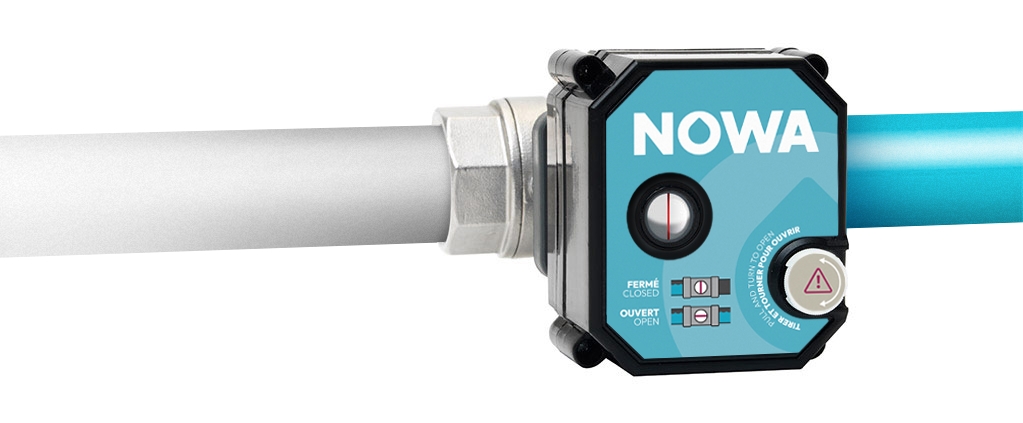
A notification on your phone is great, but if you’re in a meeting or sleeping, you can’t act on it. An automatic water shut off valve is the heart of a "protective" system. When a leak is detected, the system physically turns off the water main in seconds. This is the difference between a damp carpet and a total loss.
Cellular Connectivity (Standalone)
Don't rely on the building’s Wi-Fi. If the power goes out or the router resets, your leak detection goes blind. Look for systems that use standalone cellular networks. This ensures that even if the building’s infrastructure fails, your protection stays live.
AI and Real-Time Analytics
Modern systems like the Nowa leak protection solutions we install use AI to distinguish between a "micro-leak" (like a dripping faucet) and a "catastrophic burst." This prevents "alert fatigue" where managers start ignoring notifications because of too many false alarms.
Portfolio Management
For property managers looking after multiple sites in Burnaby, Richmond, or Coquitlam, you need a single dashboard. You should be able to see the status of every valve and every sensor across your entire portfolio from one app.

4. Addressing Local Risks: The Lower Mainland Context
Living in the Lower Mainland comes with specific challenges. Our rainy climate can sometimes mask external water ingress, making it even more important to monitor internal plumbing.
Furthermore, many older buildings in areas like Burnaby are still dealing with aging infrastructure. We’ve previously discussed how to spot Poly-B pipe risks early, which is a common culprit for sudden failures in 90s-era commercial and residential builds. A high-quality water leak detection system is your first line of defense against these aging pipes.
5. The ROI: Is it Worth the Investment?
We get it: budgets are tight. But when you compare the cost of a professional system against the cost of a major claim, the math is simple.
- Insurance Savings: Many carriers offer premium credits for buildings with monitored shut-off systems.
- Deductible Avoidance: Strata deductibles for water damage in Vancouver have skyrocketed, sometimes reaching $100,000 or more per occurrence. Avoiding just one claim pays for the system ten times over.
- Water Conservation: By catching "silent" leaks (like a running commercial toilet), these systems can save thousands in annual utility costs.

6. How to Choose: Your Checklist
When evaluating vendors, ask these questions:
- Is the system expandable? Can we start with the mechanical room and add units later?
- What is the response time? How many seconds between detection and valve closure?
- Is it locally supported? If a sensor goes offline, is there someone in the Lower Mainland who can service it? (At Leak Logic, we pride ourselves on being your local experts).
- Does it meet code and insurance requirements? Ensure the valves are lead-free and certified for commercial use.
The Leak Logic Advantage
Choosing the right system is about more than just hardware; it’s about the partner you choose to install and monitor it. At Leak Logic Canada, we specialize in protecting the structures that make our community great. We don't just sell sensors; we provide a "protective" blanket for your property.
Whether you are managing a boutique office in Gastown or a sprawling strata complex in Surrey, we have the expertise to design a system that fits your specific needs.
Don't wait for the puddle to become a pond. Take a proactive step today to safeguard your building, your tenants, and your bottom line.
Ready to Protect Your Property?
If you’re looking for the best high rise water leak detection solutions or need an automatic water shut off valve installed by professionals who understand the BC building landscape, we’re here to help.
Contact Leak Logic Canada today for a professional consultation. We serve Vancouver, Burnaby, Richmond, Surrey, and the entire Lower Mainland.
Call us at [Insert Phone Number] or visit leaklogiccanada.com to secure your building's future.
By Beylah Riviera, Managing Partner at Leak Logic Canada. Keeping the Lower Mainland dry, one building at a time.