You installed water leak sensors for apartments throughout your building. Smart move, right? But now your phone's blowing up at 2 AM with false alarms, and your tenants are getting cranky about the beeping sensors. Sound familiar?
False alarms aren't just annoying, they're dangerous. When your team starts ignoring alerts because they cry wolf too often, you've got a real problem. That's exactly when an actual catastrophic leak decides to show up and destroy someone's hardwood floors.
Let's talk about why your smart water leak detector keeps lying to you, and more importantly, how gold-plated probe technology solves this headache for good.
The Real Culprits Behind False Alarms
Environmental moisture is enemy number one. Your sensors are doing their job, they're just too good at it. Condensation from HVAC equipment, cold water pipes dripping with moisture, or even humidity spikes in mechanical rooms can trigger alerts when there's no actual leak happening.
Think about laundry rooms in apartment buildings. The humidity swings wildly every time someone runs a dryer or does a load of towels. Cheap sensors can't tell the difference between "normal humid Thursday" and "oh no, the washing machine hose just burst."

Cleaning activities make things worse. Property managers know this pain intimately: you mop the hallway floors, and suddenly three sensors are screaming. Pressure washing the parkade? Prepare for a notification storm.
Sensor degradation is the silent killer. Here's where things get technical, and it matters more than you might think.
Why Your Sensor Probes Are Failing You
Water leak detection operates on electrical conductivity. When water bridges the gap between two metal probes, it completes a circuit and triggers the alarm. Simple physics, right?
The problem is oxidation. Standard metal probes: typically copper, brass, or stainless steel: react with moisture over time. They develop a thin layer of corrosion that changes how electricity flows through them. This oxide layer makes the sensor unreliable in two nasty ways:
First, it can make sensors less sensitive. The corrosion acts like insulation, requiring more water to trigger an alarm. You might have a small leak building up for days before the sensor finally notices.
Second: and this is the false alarm maker: oxidation creates erratic electrical resistance. Sometimes the corroded surface acts like water is present when it's not. Dust particles stick to the oxidized metal, creating phantom conductivity. Your sensor thinks it's detecting moisture when it's really just detecting its own degradation.
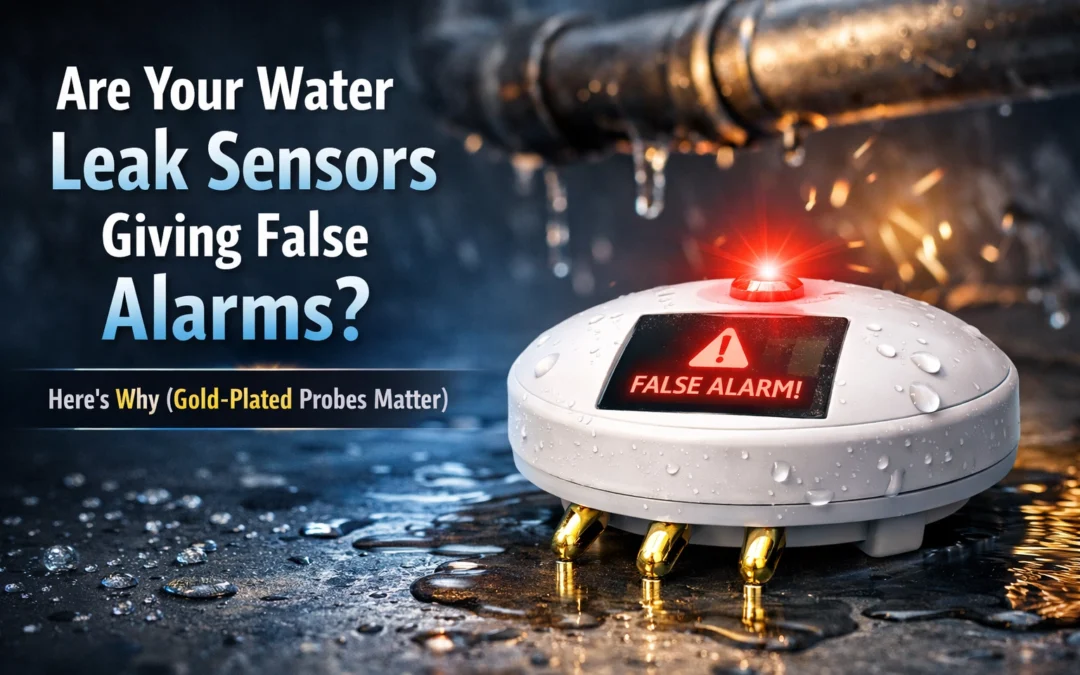
Gold-plated probes change everything. Gold doesn't oxidize in normal atmospheric conditions. It's chemically inert, which is fancy science speak for "it doesn't rust or corrode."

When you've got gold-plated probe tips on your water leak sensors for apartments, you're getting consistent electrical conductivity readings month after month, year after year. No oxide buildup. No erratic false positives from corroded surfaces. Just reliable detection.
The gold plating also resists contamination. Mineral deposits from hard water that would cake onto copper probes? They don't bond as aggressively to gold. Cleaning residues, soap scum, or environmental pollutants that cause issues with standard metals? Gold laughs at them.
It's Not Just About the Metal
Sensor placement matters almost as much as probe quality. You could have the fanciest gold-plated smart water leak detector on the market, but if you stick it directly under an AC condensation drain, you're still getting false alarms.
Position sensors away from known moisture sources. That means at least a few feet from HVAC equipment, refrigeration units, and anywhere condensation naturally forms. In apartment buildings, avoid placing sensors in high-traffic mopping zones unless you've got a maintenance schedule that accounts for cleaning activities.
Time-delay features are your friend. Quality systems let you set thresholds: the sensor needs to detect sustained moisture for a certain period before alerting. This filters out momentary splashes from cleaning or brief humidity spikes.
Dynamic environmental calibration takes this further. Advanced systems learn the normal humidity patterns in different areas and adjust their sensitivity accordingly. Your mechanical room sensor knows that 10 PM on Tuesdays gets humid because that's when the cleaning crew works, so it doesn't panic.

The Apartment Building Reality Check
Water leak sensors for apartments face unique challenges compared to single-family homes. You've got multiple units sharing plumbing infrastructure. Leaks in one suite can affect three others. Humidity from 40 different dishwashers, showers, and cooking activities creates a complex moisture environment.
False alarms in this setting aren't just inconvenient: they erode trust. When apartment residents get used to ignoring sensor beeps, they stop taking them seriously. That defeats the entire purpose of having a smart water leak detector system in the first place.
Gold-plated probe technology becomes essential in these high-stake environments. You need sensors that maintain accuracy despite constant humidity fluctuations, varying temperatures between units, and the inevitable wear from years of operation.
Moreover, apartment applications benefit from the longer lifespan gold-plated sensors provide. Replacing sensors in 50 units because of corrosion issues? That's a logistics nightmare and a budget killer. Gold-plated probes typically outlast standard metal alternatives by years, reducing your maintenance costs and hassle.
Maintenance Still Matters
Even with gold-plated probes, basic sensor hygiene prevents problems. Wipe sensors down quarterly to remove dust accumulation. Check that rope sensors haven't absorbed residual moisture that could trigger false readings: relocate them to drier mounting positions if needed.
Inspect sensors after any significant water event, even if they didn't trigger. Water from an actual leak can carry contaminants that affect any sensor type. A quick visual check and wipe-down takes minutes but prevents future false alarms.
Implement a replacement schedule based on manufacturer recommendations rather than waiting for sensors to fail. Proactive replacement prevents the degradation-related false alarms that happen when sensors reach end-of-life.

The Insurance Angle Nobody Talks About
False alarms don't just annoy people: they can affect your insurance position. Insurers love properties with smart water leak detectors because they prevent catastrophic damage. But if your system generates so many false positives that it's effectively non-functional, you're not getting the risk reduction they paid for.
Some insurance providers now audit water damage prevention systems during renewals. Documented false alarm rates can influence your premiums or coverage terms. Investing in quality sensors with gold-plated probes isn't just about convenience: it's about maintaining the insurance benefits that justified the system in the first place.
You can learn more about how proper leak detection impacts insurance coverage in our guide on water leak insurance coverage.
Making the Right Choice
When evaluating smart water leak detectors for your property, ask about probe materials. If the supplier can't tell you whether the probes are gold-plated or explain the corrosion resistance of their sensor technology, that's a red flag.
Look for systems that combine gold-plated probes with intelligent software features: time delays, environmental learning, and remote monitoring that lets you verify alerts before dispatching someone at 2 AM.
The upfront cost difference between standard and gold-plated probe sensors is usually modest compared to the long-term savings from reduced false alarms, longer sensor lifespan, and maintained insurance benefits.
Your Next Move
False alarms don't have to be part of your water leak detection experience. Gold-plated probe technology eliminates the most common cause of sensor degradation while proper placement and smart features handle environmental challenges.
Whether you're protecting a single high-rise or managing a portfolio of apartment buildings, you deserve leak detection that works reliably without the constant false alarm headaches.
Ready to upgrade your water leak sensors and eliminate false alarms for good? Call Leak Logic Canada today for expert guidance on gold-plated probe systems designed specifically for multi-unit buildings. Our team will help you choose the right smart water leak detector configuration for your property and show you how to maximize reliability while minimizing maintenance hassles. Let's protect your building the right way( call us now for more information.)