
If you're managing a high-rise building in Vancouver, you've probably wondered whether those DIY leak sensors from the big box stores can really protect your property. The short answer? Not even close.
While consumer-grade leak detectors work fine for protecting a single-family home's laundry room, they're woefully inadequate for the complexity and risk profile of multi-story buildings. Let's break down why commercial leak detection systems aren't just better: they're essential for high-rises.
The WiFi Problem: When Your Sensors Go Silent
Here's a scenario that keeps property managers up at night: Imagine a DIY sensor sitting under a water heater on the 18th floor. It's connected to the building WiFi, quietly monitoring for leaks. Then someone changes the network password during routine maintenance. Or a power outage hits your neighborhood.
Suddenly, your "protection" vanishes without anyone noticing.
Consumer-grade sensors rely entirely on WiFi connectivity. When that connection drops: whether from password changes, router failures, or power outages: your building is completely unprotected. You won't even get an alert that the system has gone offline. It's like having a security guard who randomly decides to take unannounced vacations.

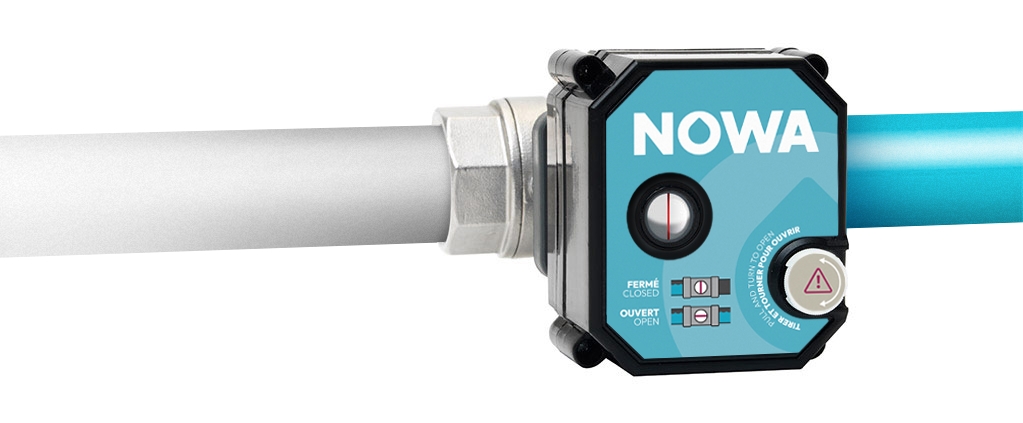
Commercial systems like Nowa sidestep this vulnerability entirely by operating on standalone cellular networks. These systems maintain constant communication regardless of what's happening with your building's internet. During a recent winter storm that knocked out power across Vancouver, buildings with cellular-based commercial systems continued monitoring while those relying on WiFi-dependent DIY sensors went dark.
The Cascade Effect: Why Stakes Are Higher in High-Rises
In a single-family home, a leak in the bathroom stays in the bathroom (or maybe damages the room below). Annoying? Yes. Catastrophic? Usually not.
In a high-rise, the math gets terrifying fast. A leak on the 25th floor doesn't just damage one unit: it cascades down through multiple floors below. What starts as a $5,000 problem becomes a $500,000 nightmare as water travels through electrical systems, HVAC infrastructure, and dozens of individual units.
This multiplier effect is exactly why Vancouver insurance providers are increasingly requiring commercial-grade leak detection systems for high-rise buildings. They've run the numbers on claim costs, and DIY sensors simply don't cut it. A luxury condominium in downtown Vancouver recently caught an HVAC system leak early using commercial detection: preventing what engineers estimated would have been over $5 million in cascading damage across 14 floors.
Your homeowner-grade detector sitting in one mechanical room? It wouldn't have caught that leak until residents on the 18th floor noticed water dripping from their ceiling.
AI That Actually Learns Your Building
DIY sensors are binary: they detect water touching the sensor, or they don't. That's it. No intelligence, no pattern recognition, no predictive capability.
Commercial leak detection systems use AI-powered algorithms that learn your building's unique water usage patterns over time. They understand that water consumption spikes every morning between 6-8 AM when residents shower. They know your irrigation system runs Tuesday and Thursday nights. They recognize the normal flow patterns of your heating system.

This intelligence means commercial systems can detect subtle anomalies that signal problems before they become disasters. A gradual increase in overnight water usage might indicate a toilet flapper wearing out. A slight pressure drop in your fire suppression system could point to a developing leak. These are the kinds of early warnings that save property managers hundreds of thousands of dollars: and they're completely invisible to basic DIY sensors.
Moreover, these smart systems reduce false alarms dramatically. Nobody wants to send maintenance scrambling to the 22nd floor at 2 AM because condensation from an air handler triggered a basic sensor.
Real-Time Response When Seconds Count
Picture this: It's 11 PM on a Friday. A pipe fitting fails in a utility room on the 14th floor. Water is pouring out at an alarming rate.
With a DIY system, maybe one person gets a push notification on their phone. Maybe they're asleep. Maybe they're on vacation and their phone is on silent. Maybe the notification gets buried under fifty other alerts. By the time someone responds, water has been flowing freely for hours.
Commercial systems trigger multi-channel emergency responses. Simultaneous emails, text messages, in-app alerts, and even automated phone calls ensure that multiple responsible parties are notified immediately. The strata manager gets alerted. The on-call maintenance supervisor gets alerted. The building's emergency contact list activates.
Additionally, these systems integrate with automatic water shut-off valves rated for commercial pipe sizes: we're talking ¾" to 6" diameter pipes, not just the ½" residential lines your DIY system handles. When a major leak is detected, the system can automatically isolate the affected zone, stopping water flow before it reaches catastrophic levels.
Scalability: One Sensor Doesn't Protect 200 Units
A typical Vancouver high-rise has dozens of potential leak points: mechanical rooms on multiple floors, individual unit connections, rooftop HVAC systems, parkade drainage, fire suppression networks, and common area plumbing. A single DIY sensor: or even ten of them: can't possibly cover this complexity.

Commercial systems are designed for scalability from the ground up. They support networks of sensors across different zones, each monitored through a centralized dashboard. Property managers can see the status of every sensor in the building at a glance, review historical data, and identify trends that might indicate developing problems.
This centralized approach also integrates with broader building management systems. Your leak detection can communicate with HVAC controls, lighting systems, and security surveillance. When a leak is detected in a mechanical room, the system can automatically trigger cameras in that area and send footage to responding personnel.
The Insurance Reality Check
Here's something many strata councils learn the hard way: insurance providers are getting extremely specific about leak detection requirements for high-rise buildings. Basic DIY sensors often don't meet their criteria for coverage discounts: or worse, may not satisfy the minimum requirements for coverage at all.
Commercial leak detection systems come with certifications, documentation, and reliability track records that insurance companies recognize and reward. Buildings with certified commercial systems routinely see 5-15% reductions in water damage insurance premiums. Over the life of a policy, that pays for the system multiple times over.
Additionally, when claims do occur, having documented commercial-grade monitoring can significantly impact claim outcomes. Insurance adjusters look favorably on buildings that took professional-grade preventative measures.
Making the Smart Choice for Your Building
DIY leak sensors have their place: they're perfect for protecting a single apartment or a small office space. But asking them to safeguard a high-rise building is like asking a bicycle to do the job of a fire truck.
The stakes in high-rise buildings are simply too high for consumer-grade solutions. Between the cascade multiplier effect, insurance requirements, and the need for reliable 24/7 monitoring, commercial leak detection systems aren't a luxury: they're a fundamental necessity for protecting your property investment and your residents' homes.
If you're managing a high-rise in Vancouver and still relying on DIY sensors (or worse, no leak detection at all), it's time to have a serious conversation about upgrading to a commercial system. The cost of prevention is always less than the cost of disaster.
Ready to explore commercial leak detection options for your building? Leak Logic Canada specializes in scalable solutions designed specifically for Vancouver's high-rise landscape. Let's talk about protecting your property the right way.